Robotics Portfolio

Being a TPM, building autonomous robotic systems through system-level integration and evaluation.

Autonomous Navigation & Estimation / Perception & Vision / Modelling & Control / Learning-based Methods / Human–Robot Interaction / System-level Integration & Evaluation
EKF / Particle Filter RRT / Dubins Path / Carrot Chasing OpenCV / Image Filtering Forward / Inverse Kinematics Supervised / Reinforcement Learning
MATLAB Python C++ SQLite
Current Focus Perception pipelines, robotics integration, and system validation
Background Technical leadership with prior L4 autonomous driving delivery
Featured Research

Core Project

Project Summary

Reachability–Stability Trade-offs in Rover–Manipulator Systems

A system-level framework for evaluating how rover mobility, manipulator configuration, and terrain jointly shape usable workspace in planetary exploration.

Research Question
Which rover mobility architecture and manipulator configuration maximise reachable workspace while maintaining static stability under terrain disturbances?

KEY Contributions
1. Unified reachability–stability evaluation framework;
2. Scalable configuration-space exploration;
3. Mobility-driven design insights.
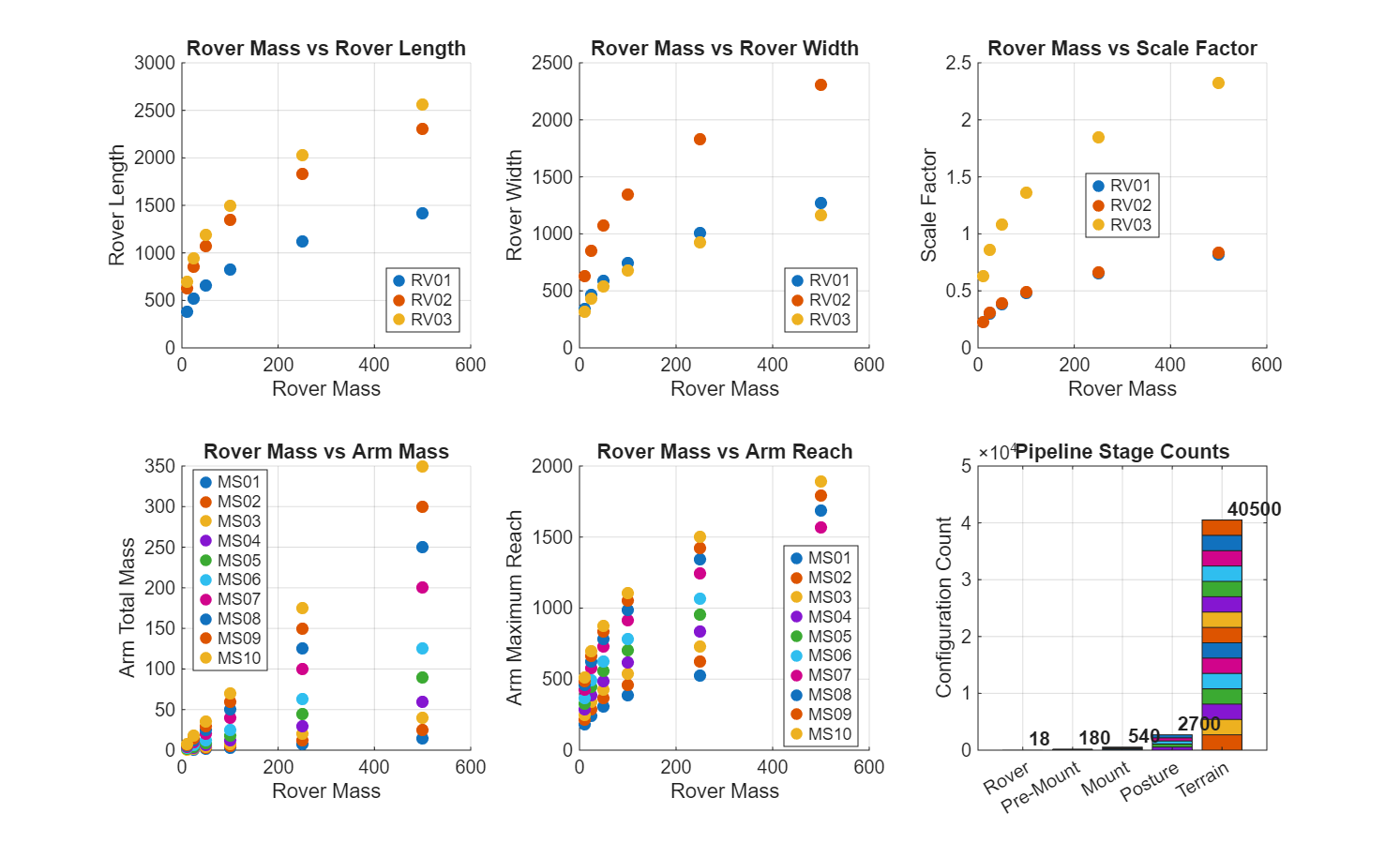
System framework overview.
Framework View
System architecture and pipeline overview.
Place your image at assets/core-project/framework-diagram.png.
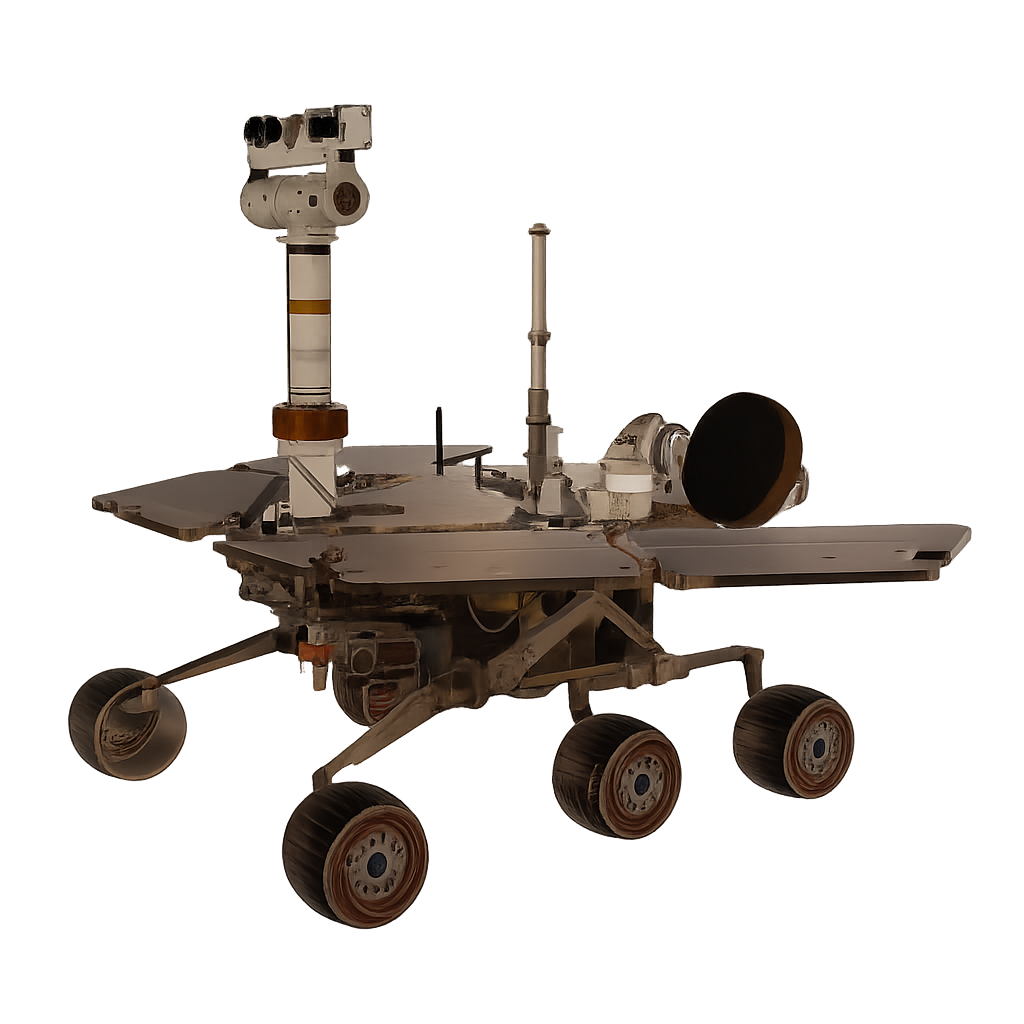
Overview of the rover-manipulator system.
Page 02 System overview and workflow entry point
Flagship Project

Python Service Platform

A computational backend that powers large-scale evaluation of rover-manipulator configurations.

It generates, evaluates, and organises system configurations to reveal how design parameters influence reachability and stability at a system level.

Use structured computation to turn design space into measurable system behaviour.
  • Generate and evaluate thousands of configurations consistently.
  • Link reachability with stability through core projection analysis.
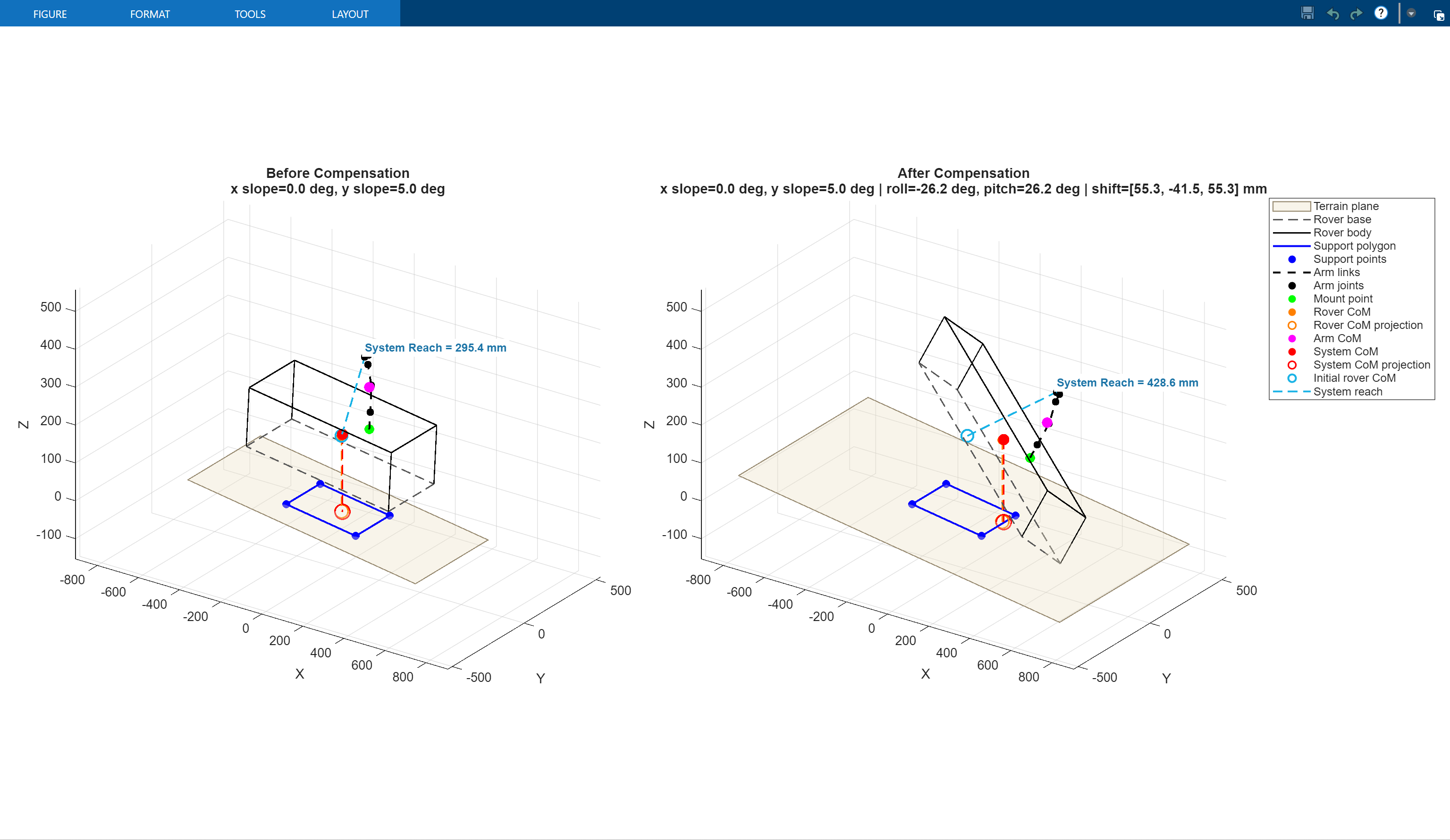
Reachability and stability analysis figure.
Page 03 Reachability and stability comparison view
System Behaviour

Compare how terrain and posture shift the reachable workspace.

This stage is for the key result figure: before and after compensation, pose adjustment, or one central comparison that explains why the system matters.

Best used for one figure that tells the story without needing long explanation.
  • Keep only the labels the viewer actually needs.
  • Use this page for the figure that supports your main claim.
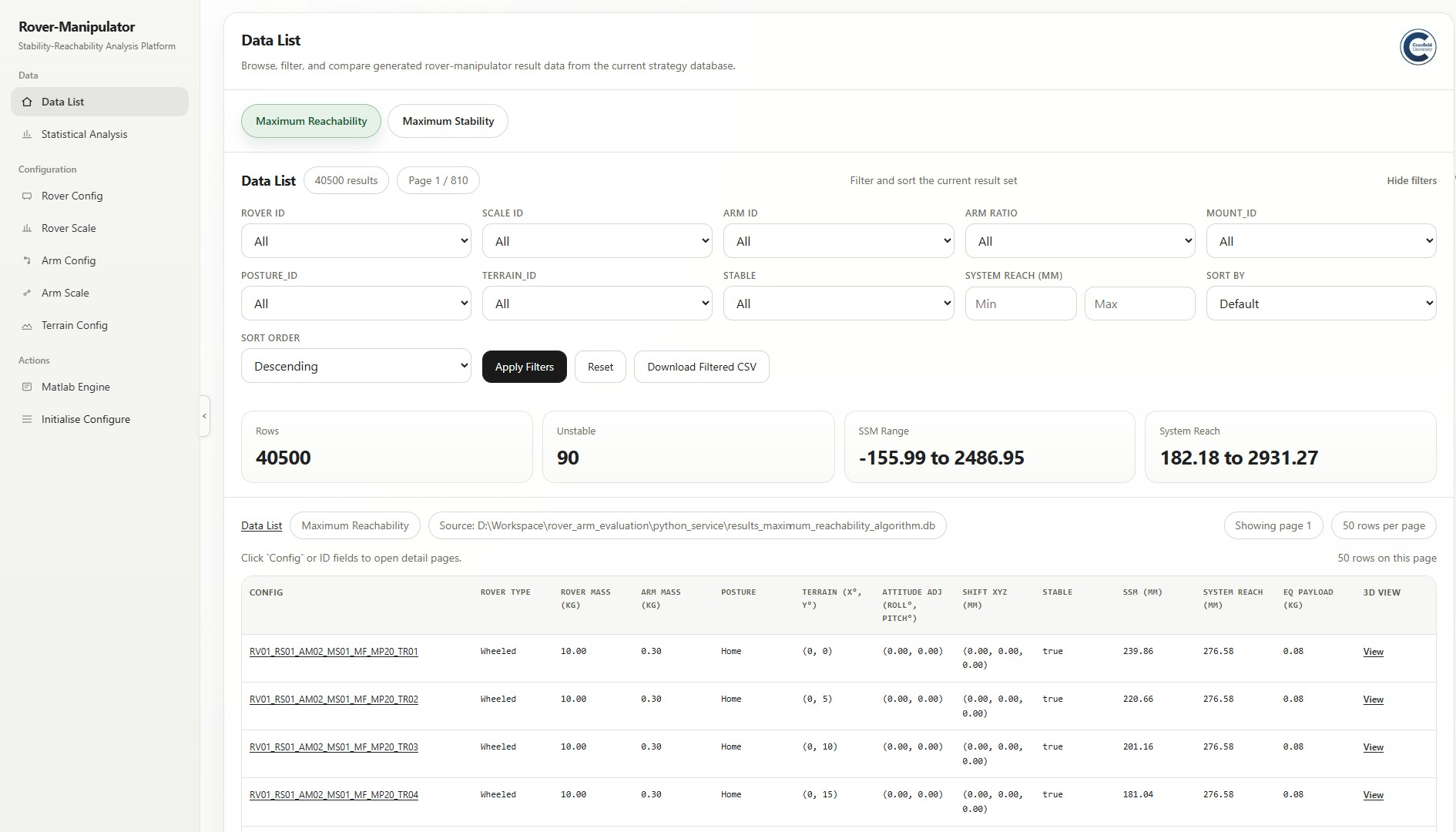
Additional system evaluation output.
Page 04 Additional experiment, dataset, or interface output
Evidence Layer

Show the supporting view that proves the framework is practical.

This page works well for your data browser, experiment panel, terrain case study, or any screenshot that shows the system can actually be used, not just modelled.

A good place for operational screenshots, scenario views, or design-space exploration tools.
  • Use wide screenshots here because the layout gives them more room.
  • Keep captions short and let the image do the work.

Autonomous Navigation and Estimation

This section covers a simplified autonomous navigation stack, including state estimation, motion planning, and path tracking. Although the demos were developed as separate tasks, they are organised here as one coherent system area.

State Estimation

EKF Landmark Tracking

Implemented nonlinear state estimation using an Extended Kalman Filter with innovation and consistency analysis.

Keywords: EKF, landmark update, NIS, uncertainty analysis

Particle Filter Demo

Built a particle-filter-based localisation demo to compare probabilistic tracking behaviour under uncertainty.

Keywords: particle filter, probabilistic robotics, localisation

Motion Planning and Tracking

Dubins Path Planning

Generated curvature-constrained paths between waypoints for nonholonomic vehicle motion.

Keywords: Dubins path, path geometry, nonholonomic planning

RRT Path Planning

Implemented Rapidly-exploring Random Tree planning with path generation and refinement.

Keywords: RRT, sampling-based planning, obstacle avoidance

Carrot-Chasing Controller

Designed a path-following controller for smooth trajectory tracking on planned routes.

Keywords: path following, carrot chasing, tracking control

Perception and Vision

My vision-related work covers both low-level image processing implementation in C++ and a higher-level machine vision measurement system for object metrology.

C++ Spatial Filtering

Implemented smoothing, sharpening, and edge detection from scratch using convolution-based image filtering.

Keywords: C++, image filtering, convolution, Sobel, Laplacian

Vision-based Measurement System

Developed an automated monocular measurement pipeline using ArUco markers, contour processing, and geometric analysis.

Keywords: OpenCV, ArUco, contour detection, machine vision metrology

Robot Modelling and Control

This section focuses on robot kinematics, inverse kinematics, singularity analysis, and trajectory control for industrial manipulator platforms.

UR3 / UR10e Kinematics

Modelled UR robots using Modified DH parameters and developed FK/IK workflows for pose analysis.

Keywords: MDH, forward kinematics, inverse kinematics, UR robots

Trajectory Planning and PD Control

Generated joint-space trajectories and evaluated tracking performance, optimisation, and disturbance response.

Keywords: trajectory planning, PD control, joint-space control

Learning and Data-driven Analysis

This section presents machine learning work related to robotic execution failure classification and broader data-driven modelling ideas.

Robot Failure Classification

Built a supervised learning pipeline for classifying robot execution failures using structured sensor data.

Keywords: Python, scikit-learn, PCA, SMOTE, classification

Reinforcement Learning Demo

A lightweight grid-world RL demo for sequential decision-making and policy learning.

Keywords: reinforcement learning, grid world, policy learning

HRI and Human Factors

These projects focus on human–robot interaction design, teleoperation feedback, workload interpretation, and safety-oriented interaction structures.

EV Battery Assembly HRI Design

Designed a human-led, robot-assisted interaction framework for safety-critical EV battery assembly tasks.

Keywords: HRI, safety, human-centred design, task allocation

Teleoperation Feedback Study

Proposed a refined experimental approach for analysing feedback and gaze behaviour in teleoperation systems.

Keywords: teleoperation, gaze behaviour, workload, human factors